
Problem and solution graphic organizers, often available as a PDF, visually represent challenges and their resolutions, aiding comprehension for K-5 students and beyond.
These tools, encompassing maps, charts, and T-charts, enhance understanding of text structures and real-world scenarios, as demonstrated by various online resources.
What is a Graphic Organizer?
Graphic organizers are visual and spatial tools designed to organize information and concepts, fostering understanding and learning. They take many forms, including problem-solution maps, cycles, Venn diagrams, and fishbone maps, often accessible as a convenient PDF format.
Essentially, they help students – and anyone – structure their thinking by presenting relationships between ideas in a non-linear way. A problem and solution graphic organizer specifically focuses on identifying issues and potential resolutions. These tools improve information assimilation, memorization, and overall comprehension. They are incredibly versatile, applicable across numerous subjects and grade levels, from elementary school through higher education, and are frequently used to analyze text structures.
They are designed to improve learning.
Why Use a Problem and Solution Graphic Organizer?
Utilizing a problem and solution graphic organizer, often found as a downloadable PDF, offers significant benefits for learners of all ages. These organizers aid in dissecting complex information, particularly when analyzing text structures like narratives or real-world scenarios.
They promote critical thinking by requiring students to actively identify issues and brainstorm viable solutions. This process strengthens analytical skills and enhances comprehension. Specifically, for K-5th graders, these maps help break down problem-solving into manageable steps. Furthermore, they are valuable tools for narrative writing, aligning with models like ‘Writers In Control’. Accessing these resources as a PDF ensures easy printing and portability for classroom or home use.

Types of Problem and Solution Graphic Organizers
Problem-solution maps, charts, and T-charts – often available as a convenient PDF – visually categorize issues and their corresponding resolutions for effective learning.
Basic Problem-Solution Map
A basic problem-solution map, frequently found as a downloadable PDF, is a foundational graphic organizer. It typically features two distinct sections: one clearly labeled “Problem” and the other “Solution.” This simple structure allows students to visually identify and connect the issue at hand with potential ways to resolve it.
These maps often utilize arrows or connecting lines to demonstrate the relationship between the problem and its solution, reinforcing the cause-and-effect dynamic. They are particularly useful for elementary students (K-5th grade) as they learn to analyze narratives and real-world scenarios. Many free online tools and printable resources offer pre-designed templates in PDF format, making implementation straightforward for educators. The focus remains on clear, concise representation of the core elements.
Problem-Solution Chart
A problem-solution chart, commonly available as a PDF worksheet, presents information in a tabular format. This organizer typically includes columns for “Problem,” “Cause,” “Solution,” and sometimes “Evidence” or “Result.” This structure encourages a more in-depth analysis than a basic map, prompting students to explore the root causes of issues and the supporting rationale for proposed solutions.
These charts are beneficial across grade levels, particularly in middle school, where analytical skills are emphasized. Numerous online resources provide printable PDF templates, often tailored to specific subjects like health (addressing common ailments) or narrative writing. Utilizing a chart format fosters organized thinking and detailed examination of complex scenarios, improving comprehension and critical thinking abilities.
T-Chart for Problem and Solution
The T-chart is a simple yet effective problem and solution graphic organizer, frequently found as a downloadable PDF. Its design features a vertical line creating two columns: one labeled “Problem” and the other “Solution.” This visual separation clearly delineates the issue from its potential resolutions, making it ideal for elementary students (K-5th grade).
This format is particularly useful for narrative writing, helping students identify conflicts and their resolutions within stories. Many free online tools and printable resources offer PDF templates. The T-chart’s straightforward layout promotes quick brainstorming and a clear understanding of cause-and-effect relationships, fostering basic problem-solving skills.
Flowchart for Problem-Solution Process
A flowchart, often available as a PDF, visually maps the steps involved in addressing a problem, showcasing the entire problem and solution process. It utilizes boxes and arrows to illustrate a sequence of events, starting with problem identification and culminating in a resolution. This organizer is beneficial for middle and high school students.
Flowcharts are excellent for complex scenarios, breaking down intricate issues into manageable steps. Many online resources provide editable PDF templates. They encourage analytical thinking and demonstrate how different actions contribute to a final outcome, strengthening problem-solving abilities in real-world contexts. This method is particularly useful for health-related issues.

Benefits of Using Problem and Solution Organizers
Problem and solution graphic organizers, often in PDF format, improve comprehension, critical thinking, and analytical skills, aiding students in effectively tackling challenges.
Improved Comprehension
Problem and solution graphic organizers, frequently accessed as a convenient PDF, significantly boost reading comprehension, particularly for younger learners (K-5th grade). By visually mapping out issues and their corresponding solutions, students can more easily grasp the core narrative or informational text structure.
These organizers break down complex information into manageable parts, allowing students to identify the central problem and understand how the proposed solution addresses it. This visual representation aids in assimilation and memorization, fostering a deeper understanding of the material. The use of these tools, as highlighted in various educational resources, transforms passive reading into an active learning process, enhancing overall comprehension skills.
Furthermore, the structured format of a PDF organizer encourages focused analysis, preventing students from getting lost in details and promoting a clearer understanding of the relationship between problems and solutions.
Enhanced Critical Thinking Skills
Utilizing a problem and solution graphic organizer, often found as a readily available PDF, actively cultivates critical thinking abilities in students of all ages. These organizers move beyond simple identification of problems and solutions, prompting deeper analysis and evaluation.
Students are encouraged to consider the effectiveness of proposed solutions, identify potential drawbacks, and even brainstorm alternative approaches. This process fosters analytical skills and encourages students to question assumptions. The visual structure of the organizer, particularly in PDF format, supports this cognitive process by providing a clear framework for organizing thoughts.
By systematically examining cause-and-effect relationships, students develop a more nuanced understanding of complex issues and refine their ability to make informed judgments.
Better Problem-Solving Abilities
Employing a problem and solution graphic organizer, frequently accessed as a convenient PDF, directly translates to improved problem-solving skills. These tools aren’t merely about finding an answer, but about systematically working through a challenge.
The structured format encourages a step-by-step approach: defining the problem, identifying potential solutions, evaluating their feasibility, and selecting the most effective course of action. A PDF version allows for easy printing and repeated use, reinforcing this process.
Students learn to break down complex issues into manageable parts, fostering a sense of control and confidence. This methodical approach, facilitated by the organizer, builds resilience and empowers students to tackle future challenges effectively.
Strengthened Analytical Skills
Utilizing a problem and solution graphic organizer, often conveniently available as a PDF, significantly strengthens analytical skills. These organizers demand students move beyond simply identifying a problem; they require a deeper examination of its components and potential consequences.
By visually mapping out the relationship between issues and resolutions, students practice critical thinking and evaluation. A PDF format allows for annotation and repeated analysis of different scenarios.
The process of discerning effective solutions from ineffective ones hones their ability to assess information, identify patterns, and make informed judgments – skills crucial for academic success and beyond.

Creating a Problem and Solution Graphic Organizer (PDF)
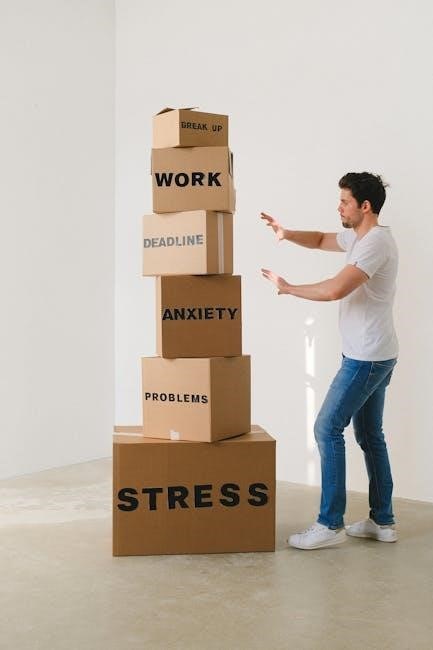
Problem and solution graphic organizers in PDF format can be designed using various software options and free online tools for easy distribution.
Software Options for Creating PDFs
Creating problem and solution graphic organizers as PDFs requires suitable software. Adobe Acrobat Pro is a robust, industry-standard option offering extensive editing and formatting capabilities, ideal for complex designs and interactive elements. Microsoft Word, PowerPoint, and Google Docs also allow for creation and exporting to PDF, though with potentially less control over advanced features.
Dedicated graphic design software like Canva provides user-friendly interfaces and pre-designed templates, simplifying the process, especially for visually appealing organizers. For more technical users, programs like Adobe Illustrator offer precise control over every design aspect. When choosing, consider your design complexity, budget, and familiarity with the software. Ensure the chosen program supports exporting high-quality, accessible PDF files.
Free Online Graphic Organizer Tools
Numerous free online tools facilitate the creation of problem and solution graphic organizers, often exportable as PDFs. Canva offers a vast library of templates, including those suitable for problem-solving, with drag-and-drop functionality. Lucidchart provides collaborative diagramming, supporting various organizer types and easy PDF export.
Creately specializes in visual workspaces, offering pre-built problem-solution templates and seamless PDF conversion. MindMeister, while primarily for mind maps, can be adapted for problem-solution analysis. These platforms generally require account creation but offer free tiers with sufficient features for basic organizer design. Utilizing these tools eliminates software installation and provides accessibility across devices, simplifying the creation process.
Steps to Design Your Own Organizer
Designing a custom problem and solution graphic organizer, destined for PDF format, begins with defining the core elements: clearly labeled sections for “Problem,” “Causes,” and “Solutions.” Sketch a layout – a simple table, flowchart, or map works well. Utilize software like Microsoft Word, Google Docs, or dedicated diagramming tools.
Add text boxes or shapes for each element, ensuring sufficient space for detailed responses. Consider visual cues like color-coding to differentiate sections. Once complete, review for clarity and logical flow. Finally, export the document as a PDF to preserve formatting and ensure accessibility. Remember to save frequently during the design process!

Using Problem and Solution Organizers in Education
Problem and solution graphic organizers, often utilized as a PDF worksheet, support students from elementary through high school in analyzing narratives and real-world issues.
Elementary School Applications (K-5th Grade)
Problem and solution graphic organizers, frequently accessed as a printable PDF, are incredibly beneficial for young learners. These visual aids help students in grades K-5th dissect simple stories and identify core elements – what the problem is and how characters attempt to resolve it.
Worksheets focusing on common childhood issues, like a cold or a scraped knee (as seen in health-related examples), provide relatable scenarios. Teachers can utilize these PDF organizers to foster comprehension skills, encouraging students to articulate the problem and brainstorm potential solutions. This builds foundational analytical thinking and strengthens their ability to understand narrative structure, preparing them for more complex texts later on.
The simplicity of a basic problem-solution map makes it ideal for this age group, promoting early problem-solving skills.
Middle School Applications
For middle school students, problem and solution graphic organizers – often utilized as downloadable PDF worksheets – transition from simple story comprehension to analyzing more complex issues. Students begin applying these tools to real-world scenarios, moving beyond fictional narratives.
These organizers, including T-charts and basic problem-solution maps, assist in dissecting articles, historical events, or scientific challenges. They encourage students to identify the root cause of a problem, evaluate potential solutions, and consider the consequences of each. Utilizing PDF versions allows for easy printing and annotation during class discussions.
Furthermore, they can be integrated with writing assignments, helping students structure persuasive essays or research reports focused on proposing solutions to identified problems.
High School and Beyond
At the high school level and beyond, problem and solution graphic organizers, frequently accessed as PDF documents, become sophisticated tools for critical analysis and complex problem-solving. Students utilize these organizers to dissect intricate societal issues, scientific dilemmas, and ethical debates.
Beyond basic identification, the focus shifts to evaluating the feasibility, effectiveness, and potential unintended consequences of various solutions. Advanced techniques, like combining these organizers with Venn diagrams or fishbone maps, enhance analytical depth. PDF formats facilitate collaborative work and detailed note-taking.
These skills are crucial for higher education and professional settings, fostering logical reasoning and informed decision-making in diverse fields.

Specific Examples & Applications
Problem and solution graphic organizers, often in PDF format, are applied to health issues, narrative writing, and real-world scenarios, improving analytical skills.
Health-Related Problems and Solutions
Problem and solution graphic organizers, readily available as a PDF worksheet, are exceptionally useful when exploring health-related issues with students. These organizers help break down common ailments – like colds or sprains – into manageable components.
Students can identify the problem (e.g., a headache) and then brainstorm potential solutions (e.g., rest, hydration, or over-the-counter medication). This structured approach fosters critical thinking about preventative measures and appropriate responses to illness.
Using a PDF format allows for easy printing and distribution, facilitating individual or group activities. The visual nature of the organizer aids comprehension, particularly for younger learners, making complex health concepts more accessible and promoting informed decision-making.
Narrative Writing with Problem/Solution
Problem and solution graphic organizers, often found as a downloadable PDF, are invaluable tools for structuring narrative writing. They assist students in developing compelling stories centered around a central conflict and its resolution.
By utilizing these organizers, students can clearly map out the initial problem faced by the protagonist, the steps taken to address it, and the ultimate outcome. This process encourages logical plot development and a satisfying narrative arc.
Specifically, organizers designed for the “Writers In Control” model help students visualize the story’s progression. A PDF version provides a readily accessible template for brainstorming and outlining, ensuring a cohesive and engaging narrative structure.
Real-World Problem Solving Scenarios
Problem and solution graphic organizers, conveniently available as a PDF, extend beyond academic exercises, proving highly effective in tackling real-world challenges. These tools facilitate a structured approach to identifying issues and brainstorming viable solutions.
For instance, a PDF worksheet might focus on common health problems like colds or sprains, prompting students to analyze causes and propose remedies. This application bridges classroom learning with practical life skills.
By visually mapping problems and potential solutions, individuals can better assess the feasibility and consequences of each option. This systematic process, aided by a readily printable PDF organizer, fosters critical thinking and informed decision-making in everyday situations.

Finding Pre-Made Problem and Solution Graphic Organizer PDFs
Problem and solution graphic organizer PDFs are readily accessible online through resources like Pinterest and educational websites, offering printable templates for diverse needs.
Online Resources for Printable Organizers
Numerous websites provide free, downloadable problem and solution graphic organizer PDFs. Educators and students can find a wealth of options tailored to different grade levels and learning styles. Several platforms host collections specifically designed for K-5th graders, featuring visually engaging maps to break down problem-solving steps.
Beyond basic templates, more complex charts and T-charts are available for middle and high school students tackling intricate scenarios. A quick online search reveals resources offering organizers for narrative writing, focusing on plot structure and conflict resolution. The MacArthur Foundation, while not directly offering PDFs, supports initiatives promoting problem-solving skills, indirectly contributing to the availability of related educational materials.
Pinterest serves as a vibrant hub, curating numerous PDF links and visual examples of these organizers, making discovery convenient. These resources streamline lesson planning and provide students with accessible tools for enhanced comprehension.
Pinterest Resources
Pinterest is a treasure trove for discovering problem and solution graphic organizer PDFs. A simple search yields countless visually appealing and readily printable options, categorized by grade level and subject matter. Many educators share their custom-designed organizers, fostering a collaborative learning environment.
Users can find basic problem-solution maps, intricate charts, and adaptable T-charts, all available as downloadable PDF files. Pinterest’s visual format allows for quick browsing and identification of organizers that best suit specific teaching needs. Pinclub, a blog focused on Pinterest growth, highlights the platform’s potential for driving traffic and sharing valuable content.
The platform’s strength lies in its curated collections, making it easy to locate resources for narrative writing, health-related problems, or general problem-solving exercises. It’s a fantastic starting point for educators seeking diverse and engaging materials.
MacArthur Foundation Resources (Related to Problem Solving)
The John D. and Catherine T. MacArthur Foundation, while not directly offering problem and solution graphic organizer PDFs, significantly supports research and initiatives focused on improving problem-solving skills. Their work centers on fostering more just and verdant communities, often requiring complex analytical thinking.
Though they don’t provide downloadable organizers, the foundation’s investments in education and cognitive development indirectly contribute to the tools and methodologies used in creating effective PDF resources. Their support for research informs best practices in teaching problem-solving strategies.
Educators can leverage the foundation’s research findings to enhance the design and implementation of graphic organizers, ensuring they align with evidence-based learning principles. Exploring their supported projects can inspire innovative approaches to problem-solving instruction.

Advanced Graphic Organizer Techniques
Problem and solution graphic organizer PDFs can be enhanced by combining them with Venn diagrams or fishbone maps for deeper analysis and clarity.
Color-coding and adaptation to diverse learning styles further maximize their effectiveness.
Combining Problem-Solution with Other Organizers (Venn Diagrams, Fishbone Maps)
Integrating problem and solution graphic organizer PDFs with other visual tools unlocks more nuanced analysis. For instance, a Venn diagram can compare and contrast multiple solutions to a single problem, highlighting their overlapping benefits and unique drawbacks.
Alternatively, a fishbone map (also known as an Ishikawa diagram) can dissect the root causes of a problem before applying solution-focused thinking. This allows for a more comprehensive understanding of the issue itself.
Using these combinations, often within a single PDF document, encourages students to move beyond simple identification of problems and solutions, fostering a deeper, more analytical approach to complex scenarios. This synergistic approach strengthens critical thinking and problem-solving skills.
Using Color-Coding for Clarity
When utilizing a problem and solution graphic organizer PDF, strategic color-coding significantly enhances clarity and comprehension. Designating one color for problems, another for solutions, and potentially a third for supporting details creates a visually distinct map of information.
This is particularly beneficial for students who benefit from visual learning cues. Consistent color schemes across multiple PDF organizers reinforce understanding and aid in quick identification of key elements.
Furthermore, color can highlight relationships between problems and their corresponding solutions, making the connections more apparent. A well-designed, color-coded PDF transforms a static organizer into a dynamic learning tool.
Adapting Organizers for Different Learning Styles
Problem and solution graphic organizer PDFs aren’t one-size-fits-all; adaptation is key for diverse learners. Visual learners thrive with color-coded organizers and diagrams, while kinesthetic learners benefit from interactive PDF forms they can manipulate digitally.
Auditory learners might verbally explain the organizer’s content, reinforcing understanding. Providing organizers with varying levels of scaffolding – from highly structured to more open-ended – caters to different needs.
Consider offering organizers with space for drawing or mind-mapping alongside traditional text boxes. A flexible PDF allows students to personalize their approach, maximizing engagement and learning outcomes.

PDF Accessibility Considerations
Problem and solution graphic organizer PDFs must be screen reader friendly and optimized for file size, ensuring inclusivity and usability for all learners.
Ensuring PDF is Screen Reader Friendly
Creating accessible problem and solution graphic organizer PDFs requires careful attention to detail for users relying on screen readers. Proper tagging of elements is crucial; headings, text fields, and even visual components like lines in a chart should have descriptive alternative text.
This allows screen readers to accurately convey the organizer’s structure and content. Logical reading order is also vital – ensure the screen reader follows a sensible flow through the organizer, mirroring how a sighted user would interpret it.
Avoid relying solely on color to convey information, as colorblind users may miss key distinctions. Furthermore, confirm sufficient contrast between text and background colors for readability. Testing with various screen readers is highly recommended to validate accessibility before distribution.
Optimizing PDF File Size
Reducing the file size of a problem and solution graphic organizer PDF is essential for easy sharing and accessibility, particularly for users with limited bandwidth. High-resolution images should be compressed without significant quality loss; consider using JPEG format for photographs and PNG for graphics with sharp lines.
Embedded fonts can dramatically increase file size; only embed necessary characters. Removing unnecessary metadata and hidden layers also contributes to optimization. PDF optimization tools, available in software like Adobe Acrobat, offer features to reduce file size automatically.
Before finalizing, test the PDF to ensure readability isn’t compromised during compression. A smaller file size enhances usability without sacrificing the organizer’s effectiveness.